In collaboration with the Public Scholars Initiative (PSI), the IKBLC Community Engagement & Programs division presents the “PhDs Go Public Research Talk Series,” which showcases doctoral students telling their community-engaged research stories in just under seven minutes.
In “Human(e) Interactions with the Environment,” nine PhD students from UBC’s Public Scholars Initiative engage the public by using the Pecha Kucha format to present on how their research is contributing to the public good, and making a change in the world. This year’s PSI themes include education, environment, culture, social justice, and health.
Select Books and Articles Available at UBC Library
Chapman, M. (2005). Once upon a time in volcán, costa rica: Integrating values into watershed management and poverty alleviation. Review of Policy Research, 22(6), 859-880. doi:10.1111/j.1541-1338.2005.00179.x [Link]
Comack, E., & Bowness, E. (2010). Dealing the race card: Public discourse on the policing of winnipeg’s inner-city communities. Canadian Journal of Urban Research, 19(1), 34-50. [Link]
Toft, M., Adeyeye, Y., & Lund, J. (2015). The use and usefulness of inventory-based management planning to forest management: Evidence from community forestry in nepal. Forest Policy and Economics, 60, 35-49. doi:10.1016/j.forpol.2015.06.007 [Link]
Williams, S., Bradley, H., Devadson, R., & Erickson, M. (2013). Globalization and work. Cambridge: Polity Press. [Available at Koerner Library Stacks HD6955 .W55 2013]
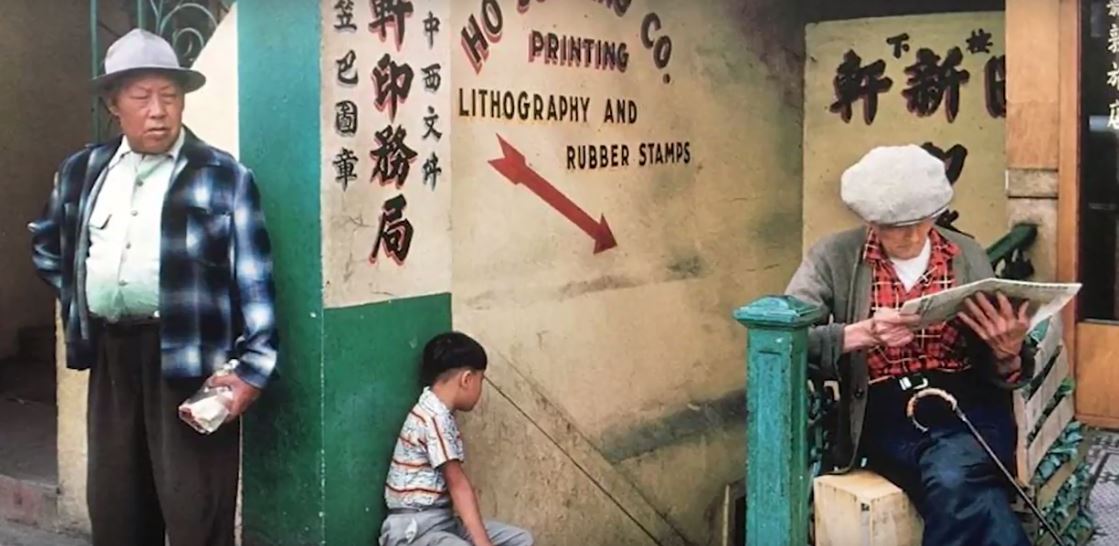
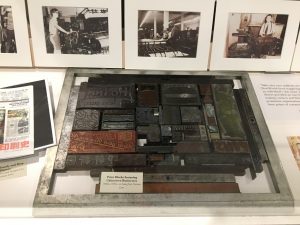
This exhibit takes place at IKBLC from April 1 to 28, 2017, as a collaboration between the Irving K. Barber Learning Centre’s Community Engagement & Programs Division and the Roedde House Museum. A re-mounting of an earlier three-part exhibit on three families called Victorian Vancouver: Family Portraits, this exhibit illustrates how migrant families in early 20th century Vancouver fostered their own sites of commerce, community, and culture. The exhibit tells the stories of the Roedde’s and their printing business and the Lam family of Ho Sun Hing printers, the city’s first Chinese-English print shop. This exhibit is a side-by-side story of these two early migrant family printers in Vancouver. Ho Sun Hing Printers was Vancouver’s first Chinese-English print shop, founded by Lam family patriarch, Lam Lat Tong.
Image credit: The Lam Family
The shop was one of the oldest operating print businesses, with its final location in Vancouver’s historical Chinatown, closing recently in 2013 after being in business for more than a hundred years. Although the Roedde House Museum does not house any of the Ho Sun Hing materials that were on display in 2014, this exhibit’s items are lent to the Museum by third-generation printer, Norman Lam. Norman also graciously took the time to share his family’s story of migration to Canada, working in the print shop, and growing up in Chinatown.
The Roedde House Museum is a fully-restored and refurnished Victorian home in the West End. Now a local hub for concerts, lectures, readings, and all sorts of community art, historical, and cultural events, the Roedde House is a “living museum” inviting guests to interact with the home and its artefacts to imagine what life was life for an upper-class migrant family at the turn of the 20th century.
Who were the Roedde’s?
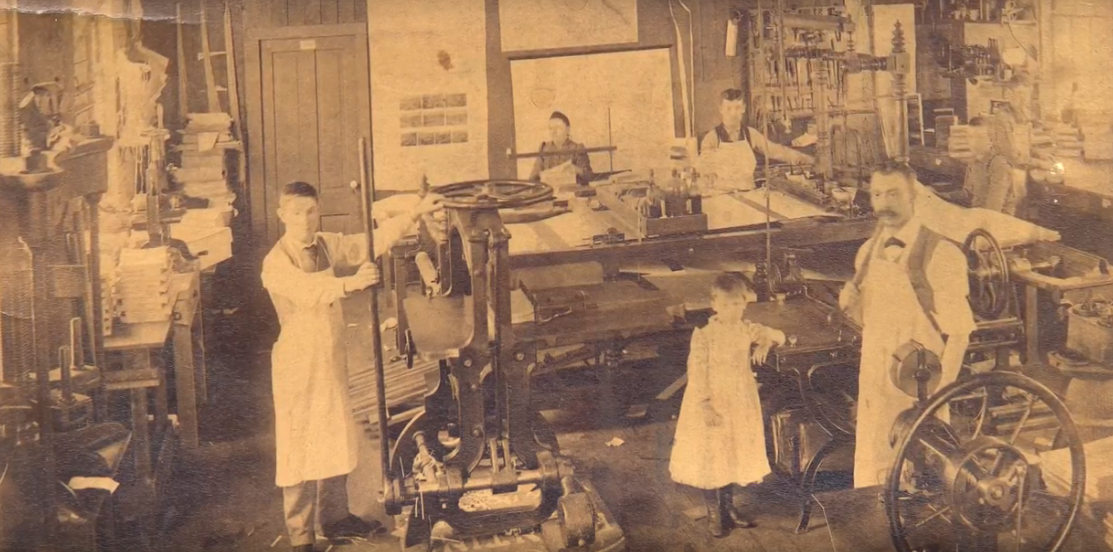
Image credit: the Roedde House Museum
Gustav Roedde was one of the city’s first bookbinders and urban settlers. He was born in 1860 in Thuringen, Germany. He trained as a printer and bookbinder in Leipzig, Germany’s famed “City of Books”. In 1882 he emigrated to Ohio USA. There he met and married Matilda Cassebohm. In 1886 the couple moved to Canada and started a family and bookbinding and printing business. The house on 1415 Barclay Street was built for them in the year 1893. The Roedde home remains an important part of Vancouver History as one of the few Heritage Houses remaining and restored from a pivotal time in the beginnings in modern Vancouver.
With the growth of fast digital technology and communication today, we often take print for granted. But back in Gustav’s time, books and print were a major mode of communication. Vancouver as a settler city and colony, was able to develop businesses, industry, journalism, travel and of course, a government. It is arguable that print and book production by pioneers like Gustav, were solely responsible for the type of communication needed to grow these very sectors of the city we live in today. A new city was for migrants like Gustav, new opportunity. There was a common saying at the time to “Take it to the Roedde’s” whenever locals had printing or bookbinding needs.
This exhibit takes place April 1 to 28th, at the Irving K. Barber Learning Centre (2nd level)
For questions, please contact the Community Engagement Librarian (Allan Cho) or Program Services Assistant (Kristen Wong)
Featuring readings by Shani Mootoo, Lydia Kwa, and Larissa Lai and a discussion of the film All Our Father’s Relationsby Elder Larry Grant and Sarah Ling.
The event was part of “Worlds at Home: On Cosmopolitan Futures,” a public symposium bringing together scholars from across Canada, the US and Australia to consider the future of cosmopolitanism as a critical approach to scholarship and praxis. The symposium took place on UBC’s Vancouver campus from March 16-17, 2017 and featured an interview with Dr. Sneja Gunew (UBC) and a launch of her book, Post-multicultural Writers as Neo-cosmopolitan Mediators (Anthem Press) as well as a keynote address by Dr. Pheng Cheah (UC Berkeley) and more.
For more information about “Worlds at Home: On Cosmopolitan Futures,” visit: http://worldsathome.arts.ubc.ca/
Speakers: Shani Mootoo, Lydia Kwa, Larissa Lai (University of Calgary), Elder Larry Grant, Sarah Ling
Select Books and Articles Available at UBC Library
Bradley, A., & Bradley, A. (10/01/2010). International journal of refugee law: Beyond borders; cosmopolitanism and family reunification for refugees in canada Oxford University Press. doi:10.1093/ijrl/eeq025 [Link]
Breckenridge, C. A. (2002). Cosmopolitanism Duke University Press. [Link]
Cheah, P. (2016). What is a world : on postcolonial literature as world literature. Duke University Press [Link]
Gunew, S.M. (2017). Post-multicultural writers as neo-cosmopolitan mediators. Anthem Press [Ordered at Koerner Library, call number forthcoming]
Gunew, S. M., & Rizvi, F. (1994). Culture, difference and the arts. St Leonards, NSW, Australia: Allen & Unwin. [Available at Koerner Library Stacks DU120 .C85 1994]
Kwa, L. (2013). Sinuous. Winnipeg: Turnstone Press. [Available at Koerner Library Stacks PS8571.W3 S56 2013]
Lai, L. (2014). Slanting I, imagining we Asian Canadian literary production in the 1980s and 1990s. Wilfrid Laurier University Press [Link]
Lai, L. (2002). Salt Fish Girl: A Novel. Toronto: T. Allen Publishers. [Available at Koerner Library Stacks PS8573.A3775 S24 2002]
Mootoo, S. (2014). Moving Forward Sideways Like a Crab. Toronto: Doubleday Canada [Available at Koerner Library Stacks PS8576.O569 M68 2014]
In collaboration with the Public Scholars Initiative (PSI), the IKBLC Community Engagement & Programs division presents the “PhDs Go Public Research Talk Series,” which showcases doctoral students telling their community-engaged research stories in just under seven minutes.
In “Explorations in Culture and Diversity,” eight PhD students from UBC’s Public Scholars Initiative engage the public by using the Pecha Kucha format to present on how their research is contributing to the public good, and making a change in the world. This year’s PSI themes include education, environment, culture, social justice, and health.
Select Books and Articles Available at UBC Library
Chang, E. C. (01/01/2015). Theatre research in canada: Towards reconciliation: Immigration in marty chan’s the forbidden phoenix and david yee’s lady in the red dress Graduate Centre for Study of Drama. [Link]
Cullis-Suzuki, S. (2007). Notes from canada’s young activists : A generation stands up for change Greystone Books. [Link]
Gan, G. (2015). Soaring to dizzying heights: Christ the saviour cathedral as a historical arena for the persecution of pussy riot. Critique of Anthropology, 35(2), 166-186. doi:10.1177/0308275X15569852 [Link]
Ivanova, L. (2014). The cultural transmission of morals : A case study of western visitors to cambodia’s genocide museums [Link]
The Institute for the Scholarship of Teaching and Learning (ISoTL) is excited to host Professor Dragan Gasevic, Chair in Learning Analytics and Informatics from University of Edinburgh, to talk about State and Directions of Learning Analytics Adoption. The analysis of data collected from user interactions with educational and information technology has attracted much attention as a promising approach for advancing our understanding of the learning process. This promise motivated the emergence of the new field of learning analytics and mobilized the education sector to embrace the use of data for decision-making. This talk will first introduce the field of learning analytics and touch on lessons learned from well-known case studies. The talk will then identify critical challenges that require immediate attention in order for learning analytics to make a sustainable impact on learning, teaching, and decision making. The talk will conclude by discussing a set of milestones selected as critical for the maturation of the field of learning analytics.
The most important take away from the talk will be that:
systemic approaches to the development and adoption of learning analytics are critical,
multidisciplinary teams are necessary to unlock a full potential of learning analytics, and
capacity development at institutional levels through the inclusion of diverse stakeholders is essential for full learning analytics adoption.
Event Details
Date: March 21, 2017
Time: 3:00 pm-4:00 pm
Where: Irving K Barber Learning Centre, Seminar (Room 2.22 A/B)
Registration Required: At this time we require everyone – UBC affiliated or otherwise – to register for the CTLT events system. If you already have a CWL please sign in. However, if you do not have a campus-wide login, then please register for a BASIC cwl account (you will see basic as the bottom option on the 3rd screen).
Speaker Biography
Dragan Gasevic is a Professor and the Chair in Learning Analytics and Informatics in the Moray House School of Education and the School of Informatics at the University of Edinburgh. As the President (2015-2017) and a co-founder of the Society for Learning Analytics Research (SoLAR), he has had the pleasure to serve as a founding program co-chair of the International Conference on Learning Analytics & Knowledge (LAK) in 2011 and 2012, general chair of LAK in 16, founding program co-chair of the Learning Analytics Summer Institute (LASI) in 2013 and 2014, and a founding editor of the Journal of Learning Analytics. Computer scientist by formal education, Dragan considers himself a learning analyst whose research centers on learning analytics, self-regulated and social learning, higher education policy, and data mining. The award-winning work of his team on the LOCO-Analytics software is considered one of the pioneering contributions in the growing area of learning analytics. Recently, he has founded ProSolo Technologies Inc. that developed a software solution for tracking, evaluating, and recognizing competencies gained through self-directed learning and social interactions. He is a frequent keynote speaker and a (co-)author of numerous research papers and books.
Please join us for an exploration of cultural humility and what it means for how we teach and learn. We will hear from Dr. Evan Adams, Chief Medical Officer of the First Nations Health Authority and a trailblazer in promoting cultural humility within the healthcare system.
With humour and wisdom, Dr. Adams offers insights into the journey of cultural humility and how this ongoing process of learning and reflecting can strengthen relationships and improve outcomes.
Participants are welcomed and encouraged to engage in this interactive session to advance the dialogue on cultural humility and learn from one another’s journeys.
Learning Objectives
1. Explore the meaning of cultural safety and cultural humility.
2. Reflect on the role of cultural humility in your work – how can cultural humility enhance experiences in the classroom?
Registration Required: At this time we require everyone – UBC affiliated or otherwise – to register for the CTLT events system. If you already have a CWL please sign in. However, if you do not have a campus-wide login, then please register for a BASIC cwl account (you will see basic as the bottom option on the 3rd screen).
Event Details
Date: March 21, 2017
Time: 10:00 am-12:00 pm
Where: Irving K. Barber Learning Centre, Seminar (Room 2.22 A/B)
Speaker Biography
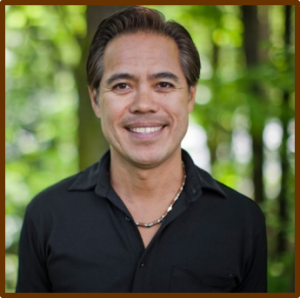
Dr. Evan Adams is a citizen of Tla’amin (Sliammon) First Nation in Powell River, BC, and Chief Medical Officer at the First Nations Health Authority (FNHA), the first health authority of its kind in Canada. In this role, Dr. Adams acts as the “face” of the FNHA’s public health function and serves as its representative / keynote speaker at health conferences and community events. He also develops and/or strengthens partnerships with First Nations health governance partners, BC First Nations, provincial and federal government health agencies, and other FNHA departments, to establish relationships and action plans. Before joining the FNHA, Dr. Adams served as Deputy Provincial Health Officer (BC), where he provided direction on First Nations health issues to the Ministry of Health, reported to First Nations citizens on health issues affecting the general population, and set out a path for the improvement of First Nations health and wellness. He completed an MD at the University of Calgary, an Aboriginal Family Practice residency at St Paul’s Hospital/UBC (as Chief Resident), and a Master of Public Health from Johns Hopkins University. (Photo by Nadya Kwandibens)
“Open scholarship, which encompasses open access, open data, open educational resources, and all other forms of openness in the scholarly and research environment, is changing how knowledge is created and shared.” Association of Research Libraries Open Scholarship
In this session, we’ll explore ideas of scholarly practice in the digital age and how they can inform or be applied to teaching and learning. How has scholarly practice changed and what are the possibilities that open practices and platforms open up when students and faculty members become co-creators engaged in meaningful, generative work?
We’ll look at emerging practices at UBC that are engaging students as producers of knowledge using open platforms to align classroom spaces with scholarly practice.
Where: Irving K. Barber Learning Centre, Lillooet Room 301
Registration Required: At this time we require everyone – UBC affiliated or otherwise – to register for the CTLT events system. If you already have a CWL please sign in. However, if you do not have a campus-wide login, then please register for a BASIC cwl account (you will see basic as the bottom option on the 3rd screen).
Research Day showcases the contributions of the iSchool students and faculty working at the intersections of archival, information, library and children’s literature studies.
Questions about social media as sources of information about individuals (of different ages, genders, backgrounds) and communities, their uses in our personal and professional lives, and impact on our practices and overall well-being are central to the work of students and scholars across all our iSchool programs. Recognizing this common ground, this year’s Research Day will focus on the broad topic of “information, social media, and well-being,” considering the many connections social media now have with the way we do information, library, and archival studies.
This event happened on March 10, 2017.
Speaker:
Lyle Ungar, Professor of Computer And Information Science, University of Pennsylvania
Dr. Lyle Ungar is a Professor of Computer and Information Science at the University of Pennsylvania, where he also holds appointments in multiple departments in the Schools of Business, Medicine, Arts and Sciences, and Engineering and Applied Science. Lyle received a B.S. from Stanford University and a Ph.D. from M.I.T. He has published over 200 articles, supervised two dozen PhD students, and is co-inventor on eleven patents. His current research focuses on developing scalable machine learning methods for data mining and text mining, including spectral methods for NLP, and analysis of social media to better understand the drivers of physical and mental well-being.
“Social media such as Twitter and Facebook provide a rich, if imperfect portal onto people’s lives. We analyze tens of millions of Facebook posts and billions of tweets to study variation in language use with age, gender, personality, and mental and physical well-being. Word clouds visually illustrate the big five personality traits (e.g., “What is it like to be neurotic?”), while correlations between language use and county level health data suggest connections between health and happiness, including potential psychological causes of heart disease.”
Select Books and Articles Available at UBC Library
Smith, R. J., Crutchley, P., Schwartz, H. A., Ungar, L., Shofer, F., Padrez, K. A., & Merchant, R. M. (2017). Variations in Facebook Posting Patterns Across Validated Patient Health Conditions: A Prospective Cohort Study. Journal of Medical Internet Research, 19(1), e7. [Link]
Carpenter, J., Preotiuc-Pietro, D., Flekova, L., Giorgi, S., Hagan, C., Kern, M. L., … & Seligman, M. E. (2016). Real Men Don’t Say “Cute” Using Automatic Language Analysis to Isolate Inaccurate Aspects of Stereotypes. Social Psychological and Personality Science, 1948550616671998. [Link]
Kern, M. L., Park, G., Eichstaedt, J. C., Schwartz, H. A., Sap, M., Smith, L. K., & Ungar, L. H. (2016). Gaining insights from social media language: Methodologies and challenges. [Link]
Sinnenberg, L., DiSilvestro, C. L., Mancheno, C., Dailey, K., Tufts, C., Buttenheim, A. M., … & Asch, D. A. (2016). Twitter as a Potential Data Source for Cardiovascular Disease Research. Jama cardiology, 1(9), 1032-1036. [Link]
Carpenter, J., Preotiuc-Pietro, D., Flekova, L., Giorgi, S., Hagan, C., Kern, M. L., … & Seligman, M. E. (2016). Real Men Don’t Say “Cute” Using Automatic Language Analysis to Isolate Inaccurate Aspects of Stereotypes. Social Psychological and Personality Science, 1948550616671998. [Link]
Brooks, S. (05/01/2015). Computers in human behavior: Does personal social media usage affect efficiency and well-being? Elsevier. doi:10.1016/j.chb.2014.12.053 [Link]
Gerson, J., Plagnol, A. C., & Corr, P. J. (10/01/2016). Computers in human behavior: Subjective well-being and social media use: Do personality traits moderate the impact of social comparison on facebook? Elsevier. doi:10.1016/j.chb.2016.06.023 [Link]
This session aims to identify ways to support and promote accurate information about Aboriginal people, identify how current library structures may be barriers to full inclusion for Aboriginal students and how to address them, and identify power issues at play in our own instructional practice and how to make positive changes. Panelists are asked to consider the following questions:
How do you help your community find themselves in your collection or in your course? How do you Indigenize your instruction?
Panelists
Deborah Lee is a Cree, Mohawk and Métis librarian. She worked as a Reference Librarian at the National Library of Canada / Library and Archives Canada for seven years. In 2007, Deborah became the Indigenous Studies Portal Librarian at the University of Saskatchewan. She has been the Indigenous Studies Liaison and Aboriginal Engagement Librarian at UofS since 2011. Deborah has presented widely at local, national and international conferences, including ACRL in 2015.
Patricia Geddes is the Student Engagement and Community Outreach Librarian at Vancouver Island University. She is a Liaison Librarian for Aboriginal Education Services, First Nations Studies, and the Faculty of Academic and Career Preparation.
Jenna Walsh was born in Vancouver on unceded Coast Salish territory and grew up in an inner city neighbourhood with a diverse Aboriginal population. At the University of British Columbia, her Interdisciplinary BA focused on global Indigeneity, and she did the First Nations Curriculum Concentration program for her MLIS.
Kim Lawson is Heiltsuk with English/ Danish ancestry. She is one of the authors of the “Protocols for Native American Archival Materials,” was the Archivist/ Librarian at The Union of BC Indian Chiefs Resource Centre, has an MLIS from UBC and is learning to speak Heiltsuk.
Camille Callison is a member of the Tahltan First Nation and the Indigenous Services Librarian & Liaison Librarian for Anthropology, Native Studies and Social Work at the University of Manitoba, Member of the UM Indigenous Advisory Circle (IAC) and has presented extensively on Indigenous Library & Archives issues.
Moderator
Sarah Dupont’s ancestry is Metis, French, and British. She is from Prince George, BC and is the Aboriginal Engagement Librarian at UBC Library, where she works in the Xwi7xwa Library and Irving K Barber Learning Centre. Her liaison areas include Indigenous Education and Indigenous Social Work. Sarah is the project manager for Indigitization, a UBC program to support First Nations digitization and preservation of their community resources.
Select Books and Articles Available at UBC Library
Doerksen, K., Karen Doerksen, & Carla Martin. (03/01/2016). Partnership: A loose coupling: Aboriginal participation in library education – A selective literature review The Partnership, provincial and territorial library association of Canada c/o Ontario Library Associ. doi:10.21083/partnership.v10i2.3337 [Link]
Face, M., & Hollens, D. (2004). A Digital Library to Serve a Region: The Bioregion and First Nations Collections of the Southern Oregon Digital Archives. Reference & User Services Quarterly,44(2), 116-121. [Link]
Kelly, B., & Barbara Kelly. (01/01/2011). Partnership: Reflecting the lives of aboriginal women in canadian public library collection development The Partnership, provincial and territorial library association of Canada c/o Ontario Library Associ. [Link]
Acknowledgement: The Irving K. Barber Learning Centre is pleased to contribute to the promotion of this unique opportunity. We acknowledge the Haida Gwaii Higher Education Society’s websiteas the source for most of this content.
The Haida Gwaii Higher Education Society is an enterprising non-profit organization that develops and delivers transformative education inspired by Haida Gwaii. In partnership with leading universities, we offer students immersive, experiential learning opportunities in rural, resource-dependent communities in transition. Here the Haida Nation, island communities, and provincial and federal governments are working through complex joint management models towards reconciliation and sustainability.
Drawing on Haida Gwaii’s legacy of innovation and leadership, HGHES offers a range of programming including undergraduate semesters, executive education and professional development courses, research opportunities, public lectures and workshops, and more.
The Haida Gwaii Higher Education Society embraces a place-based approach; we see the social and ecological systems of Haida Gwaii as vibrant natural classrooms for our students to engage with, grounding course content in living, local case studies. We believe in working together and facilitating a rich collaboration between academics and local knowledge holders, supporting a meaningful learning exchange and the development of a broad perspective.
As issues around the globe become increasingly complex, If students are from UBC, there is an agreement in place to facilitate registration.
For non-UBC students there is an opportunity to earn UBC credits and transfer them back to the student’s home institution.