Julienne Molineaux – Library and Archives Canada, Ten Years After the Merger
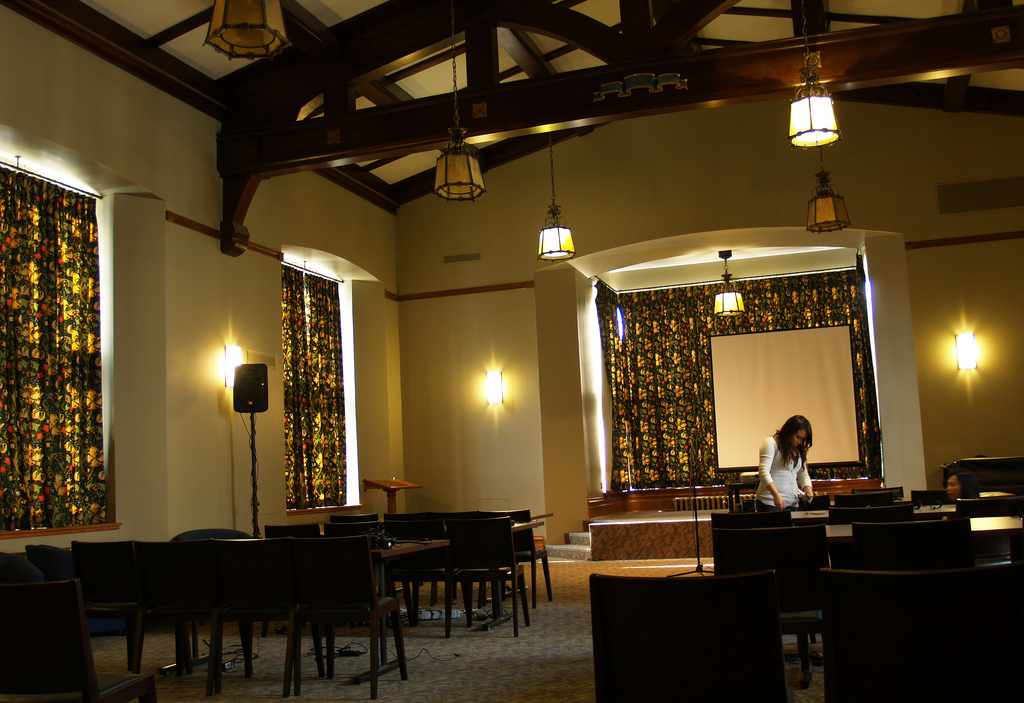
Webcast sponsored by the Irving K. Barber Learning Centre and hosted by the School of Library, Archival, and Information Studies (SLAIS). The School of Library, Archival and Information Studies, the iSchool at The University of British Columbia, cordially invites you to the first of our Fall 2012 Colloquium Series, where Julienne Molineaux will present “Library and Archives Canada, Ten Years After the Merger.” Integration of collections and institutions in the libraries, archives and museums sector is almost commonplace now, but in the early 2000s the merger of Canada’s National Archives and National Library to create Library and Archives Canada /Bibliothèque et Archives Canada (LAC-BAC), was novel. Ten years since that process formally began it is worth asking, how is this institution faring? Restructuring does not always solve the problems it sets out to solve. Additionally, new problems are created along the way. This talk addresses two questions: have the problems that prompted the LAC merger been solved, and what new problems have emerged?
UBC Library Research Guides
Celebrate Learning Week 2012
The Irving K. Barber Learning Centre is pleased to two community events as part of Celebrate Learning Week 2012.
The Cross-Cultural Dialogue, October 27th, Saturday, 2:00-5:00 p.m. Closing Night and Art Sale, October 27, Saturday, 5:00-8:00 p.m. Room 261, Peace River Room, Irving K. Barber Learning Centre
The October 27 cross-cultural symposium, pecha-kucha style, brings together artists, community organizers, youth leaders, planners and city residents to address questions about the role of arts, culture and artistic expressions in community capacity-building within and across multi-cultural, multi-ethnic, multi-linguistic, multi-religious diasporic communities, marked by increased internal diversity and interactions with indigenous and settler communities, both old and new. What role do arts and culture play in citizenship building and community development within multicultural cities such as Vancouver? What can the arts, culture and artistic expressions do to engage multicultural communities in inter-cultural dialogues about social justice and sustainability in our cities that aim for greater social cohesion and inclusivity? How do Vancouver’s multi-cultural communities interpret, interrogate and interact with the City’s “green” and “sustainable city” vision and mandate, given these communities’ existing environmental knowledge and previous experiences with environmental agendas? What can the City of Vancouver and other Canadian cities, as well as the arts and community development community do to respond to these multiple voices and values to make our cities even more sustainable, just, inclusive, innovative, and creative?
Speakers and presenters include:
- Judith Marcuse, LL.D. (Hon.), Founder and Co-Director, International Centre of Arts for Social Change; Simon Fraser University Faculty of Education
- Alden Habacon, founder Schema Magazine; UBC Director, Intercultural Diversity and Strategy Development
- Diana Leung, cultural planner, City of Vancouver, Cedar-Bamboo
- Kamala Todd, social planner, City of Vancouver, Storyscapes
- Callista Haggis & Claire Robson of Quirke (Queer Imaging, Riting Kollective of Elders)
- Melanie Schambach, Emily Carr University
- Norma-Jean McLaren, facilitator, artist, social planner
- Raul Gatico, Mexican-Canadian poet and former political prisoner
- Alejandra Lopez and Youth, La Boussole’s The Illustrated Journey Project
- Honey Mae Caffin and JR Guerrero, CPSHR, Anti-Mining and Multi-Media experience
- Metha Brown, film-maker, Peace It Together, Palestinian-Israeli-Canadian dialogues
- Mutya Macatumpag, dancer, poet, singer, actor, founder of MoonpulsE Productions
This event is organized by Migrante BC, Canada-Philippine Solidarity for Human Rights, Multi-cultural Helping House Society, Tulayan, Kensington Community Office of MLA Mable Elmore and UBC Professor Leonora Angeles, are jointly sponsored by the City of Vancouver’s Community and Neighbourhood Arts and Development Grants Program 2012; University of British Columbia Irving K. Barber Learning Centre; Department of Asian Studies; Institute for Asian Research; Institute for Gender, Race, Sexuality and Social Justice; Liu Institute for Global Issues; and the School of Community and Regional Planning.

Weyman Chan author eading and discussion of Chinese Blue, Chilcotin Room (Rm 256), Irving K. Barber Learning Centre, October 30, 3.30-4.30 p.m.
On October 30, the Learning Centre will feature poet Weyman Chan for an author reading and talk. Drawing on more than two thousand years of ancient Chinese tradition that present diverse philosophical modes of being, whether it be the spiritual teachings of Kong Zi or Lao Tzu, the military dicta of Sun Tzu or the complex sensibilities expressed by poets such as Ssu-ma Hsiang-ju, Li Bai, Du Fu and Wang Wei in the wake of a tumultuous imperial government, Weyman Chan restates these concerns of the past while addressing other “first world problems” in our own contemporary era.
In Chinese Blue, the poet “character” sifts through the earth’s long history of geological layering and forgetting, grappling with the perpetual fragmentation of identity. The poet struggles with the prospect of any inky blots that suggest the finished work of a creator, subject to expediencies—ambition, romance, betrayal—that leave us flawed and human, taking the reader on a spiritual quest burdened by an endless sea of flotsam.
In a stoic attempt to reconcile biological drives with a stance of non-presence and to find a place beyond “perpetual worry” where he can accept ancestral mistakes while tentatively channelling the voices of advertising that condition our vernacular and massage our minds—offering a cliché happy ending to what remains of our physical existence—the poet finds himself wading through jazzily visionary delineations of the modern city, numbed and soundly crushed between “the word and the thing.” To attend this event, please register here.
Darren Bifford and Grant Lawrence
Darren Bifford and Grant Lawrence at the Robson Reading Series
Join us at 7pm, on Thursday, October 11, for a reading by Darren Bifford and Grant Lawrence at Robson Square. Doors open at 6:45. Admission is free and books will be available for purchase and signing.

Darren Bifford is originally from Summerland, BC. His work has been published in a variety of journals across Canada. He’s also the author of Wolf Hunter, a chapbook published by Cactus Press (2010). Wedding in Fire Country is his first collection of poetry. Darren currently lives in Montreal, Quebec.

Grant Lawrence hosts the popular CBC Radio 3 Podcast with Grant Lawrence, and Grant Lawrence Live on CBC Radio 3 and Sirius 86, and can also be heard on various CBC Radio One programs such as DNTO, Spark, All Points West and On The Coast. He still spends much of each summer at his cabin in the Sound.
Ashok Kotwal and Bharat Ramaswami – Food Security in India
India is on the brink of enacting a law to guarantee subsidised food to about two-thirds of its population. The proposed ‘right to food’ is contentious for its cost, coverage and efficacy. This lecture is about what reforms offer the best prospects. Bharat Ramaswami, Planning Unit, India Statistical Institute and Ashok Kotwal, Economics, UBC. This reading is part of the ongoing Green College Principal’s thematic series, “Public Health Law and Policy in Asia.”
Select Articles Available at UBC Library
Dixit, A. (2011). Poverty and food security in Gujarat, India. The European Journal of Development Research, 23(1), 129-150. doi:10.1057/ejdr.2010.36. [Link]
Gustafson, D. (2013). Rising food costs & global food security: Key issues & relevance for India. Indian Journal of Medical Research, 138(3), 398-410. [Link]
Rao, V. S. (2012). India’s food bill will not provide the security it claims. BMJ (Clinical Research Ed.), 344, e3194.
UBC Library Research Guides
Re-Imagining and Indigenizing the Library's Role in Educating New Teachers
The role of libraries will be examined — specifically the Education Library, First Nations House of Learning Xwi7xwa Library, and more broadly, school libraries. The re-imagined teacher education program has inspired revision in the role Education librarians play to respectfully and meaningfully integrate First Nations history, content, and world-views; commit to inquiry and research oriented education; and emphasize diversity and social and ecological justice. Our libraries can support teacher candidates as they acquire theoretical understandings for teaching and apply those theories in their practice. We bring teacher candidates and ideas together in library spaces that offer unique learning environments, where inquiry, collaboration, the role of Indigenous Knowledge, relationships and ways of knowing are celebrated. This session will be interactive: we present our re-imagined roles and seek feedback and ideas to further ensure our relevance for faculty and teacher candidates.
Speakers include: Jo-Anne Naslund, Acting Head, Instructional Programs Librarian, Education Library; Education Library; Sarah Dupont, Aboriginal Engagement Librarian, First Nations House of Learning—Xwi7xwa Library.
Relevant Books and Articles at UBC Library
Naslund, J. (2010). Inuit publisher. Canadian Children’s Book News, 33(3), 6.
Cupples, J. (1977). The Aboriginal studies library project. Proceedings of the Nineteenth Conference, Library Association of Australia, Edited by Anne Batt. Hobart (Tasmania), Library Association of Australia Conference Committee, 1977 160-171
Briggs-Smith, N. (1997). Promoting library services for Aboriginals. Link-Up, Mar, 3-6.
UBC Library Research Guides
Anthony Kupferschmidt – Understanding Dementia and Brain Health
A collaboration between Woodward Library, Irving K. Barber Learning Centre, and Fraser Valley Regional Library, the Health Information Series presents Anthony Kupferschmidt. Hosted by the Fraser Valley Regional Library’s Ladner Pioneer Library, Anthony Kupferschmidt will be giving an important presentation on alzheimer and some of the work done by Alzheimer Society of BC. Healthy aging is important for everyone, and it is essential not to forget the health of your brain as well! This workshop encourages participants to actively engage in protecting and maintaining their brain. Learn more about Alzheimer’s disease and other dementias, as well as strategies for improving the health of your mind, body and spirit.
Biography
As the Support and Education Coordinator at Alzheimer’s Society of B.C, Anthony Kupferschmidt leads educational sessions for persons with dementia, their family members and friends, and the general public. He also leads support groups for caregivers and persons with dementia, and offers one-on-one support for those in his community touched by dementia. Formally educated and deeply experienced with the functions of the aging brain, Anthony uses that education in his support for those living with dementia as well as their caretakers and on their journey. Anthony received his Masters degree in Gerontology at Simon Fraser University (SFU) and was Neuropsychometrist in the Clinic for Alzheimer Disease and Related Disorders at the University of British Columbia (UBC) Hospital.
UBC Library Resources
Percy, M., Moalem, S., Garcia, A., Somerville, M. J., Hicks, M., Andrews, D., … & Freedman, M. (2008). Involvement of ApoE E4 and H63D in sporadic Alzheimer’s disease in a folate-supplemented Ontario population. Journal of Alzheimer’s Disease, 14(1), 69-84. [Link]
O’Rourke, N., Kupferschmidt, A. L., Claxton, A., Smith, J. Z., Chappell, N., & Beattie, B. L. (2010). Psychological resilience predicts depressive symptoms among spouses of persons with Alzheimer disease over time. Aging and Mental Health, 14(8), 984-993. [Link]
O’Rourke, N., Naslund, J., Kupferschmidt, A., & Beattie, B. L. (2009). Idealization of marriage as a distress buffer among spouses of Alzheimer patients. Alzheimer’s & Dementia: The Journal of the Alzheimer’s Association,5(4), P231-P231. [Link]
UBC Research Guides
Ozzie Zehner – Green Illusions
Hosted by the UBC Reads Sustainability Lecture Series. Ozzie Zehner is the author of Green Illusions and a visiting scholar at the University of California, Berkeley. His recent publications include public science pieces in Christian Science Monitor, The American Scholar, The Humanist, The Futurist, Women’s Studies Quarterly and The Economist as well as educational resources in Green Technology (Sage, 2011) and Green Culture (Sage, 2011). Zehner’s research and projects over the previous two decades have been covered by CNN, MSNBC, USA Today, Science News Radio, The Washington Post, Business Week and numerous other media outlets. He also serves on the editorial board of Critical Environmentalism. Zehner primarily researches the social, political and economic conditions influencing energy policy priorities and project outcomes. His work also incorporates symbolic roles that energy technologies play within political and environmental movements. His other research interests include consumerism, urban policy, environmental governance, international human rights, and forgeries.
Relevant Books and Articles at UBC Library
Zehner, O. (2012). Ozzie Zehner: Alternatives to alternative energy. Bulletin of the Atomic Scientists, 68(5), 1-7. doi:10.1177/0096340212459037 [Link]
Zehner, O., Project Muse University Press eBooks, & Ebrary Academic Complete (Canada) Subscription Collection. (2012). Green illusions: The dirty secrets of clean energy and the future of environmentalism. Lincoln: University of Nebraska Press. [Link]
Zehner, O. (2014). Conjuring clean energy: Exposing green assumptions in media and academia. Foresight, 16(6), 567-585. doi:10.1108/FS-11-2013-0062 [Link]
UBC Library Research Guides
Diaspora, Diversity, & Dialogue Art Exhibition
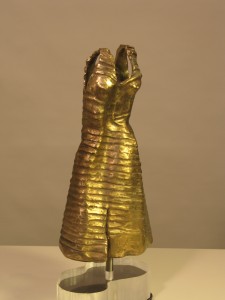
A visual artist living in Vancouver, Canada, Bert Monterona is an artist, educator and cultural worker who specializes in designing, illustrations, painting, murals, sculpture, installations, set as well as props for stage performances and TV shows. As an artist-educator he has organized art workshops in schools and communities, for skills development, art-as- therapy and peace building. He facilitated art workshops and lecture- presentations for art educators, social workers, artists, fine arts students, art enthusiasts, street children and out of school youth in different places and venues like, University of Western Australia, Perth Institute of Contemporary Arts, Simon Fraser University, University of British Columbia, University of the Philippines, Vargas Museum, Vermont Studio Centre, Leigh Square Community Arts Village, Children’s Rehabilitation Centre and different Communities.
My works of art is a process of examining the future and rediscovering the past to build the present, to envisage complex challenges in order to link between different culture, places, times and events.
The basis of my thought is concerned with the balance of high technology and indigenous life, and the growing rediscovery of the importance of indigenous environment as component and significance to the modern times in order to relate and communicate socio-economic and environmental problems.
My works are strongly influenced by social, cultural, religious, spiritual and political norms. Hence my works, whatever their forms and motives reflect the magical ritualism of my rich indigenous roots.
My ideas and inspirations come from my daily observation of the environment and events and interaction with the different people and culture. But I’m also inspired by things that may seem irrelevant to others as my ideas and energies constantly activated my mind and heart for a creative art work.
I believe that art as a ritual has a healing capacity and the artist as a healer will give valuable contributions to balance the mind for a meaningful future.
— Bert Monterona
Program of Events
Opening Night Reception, September 21st, Friday, 6:30-9:00 p.m. Rm. 256, Chilcotin Boardroom, UBC Irving K. Barber Learning Centre
After a Ribbon Cutting Ceremony – with Dr. Leonora Angeles and IKLBC Assistant Director — at the IKBLC foyer, the evening’s event will include guest speakers Dr. Henry Yu and Alden Habacon, UBC. Bert Monterona will give an artist’s response as the closing speech to the evening. Food and light beverages will follow.
The Cross-Cultural Dialogue, October 27th, Saturday, 2:00-5:00 p.m. Closing Night and Art Sale, October 27, Saturday, 5:00-8:00 p.m. Room 261, Peace River Room, Irving K. Barber Learning Centre
The October 27 cross-cultural symposium, pecha-kucha style, brings together artists, community organizers, youth leaders, planners and city residents to address questions about the role of arts, culture and artistic expressions in community capacity-building within and across multi-cultural, multi-ethnic, multi-linguistic, multi-religious diasporic communities, marked by increased internal diversity and interactions with indigenous and settler communities, both old and new. What role do arts and culture play in citizenship building and community development within multicultural cities such as Vancouver? What can the arts, culture and artistic expressions do to engage multicultural communities in inter-cultural dialogues about social justice and sustainability in our cities that aim for greater social cohesion and inclusivity? How do Vancouver’s multi-cultural communities interpret, interrogate and interact with the City’s “green” and “sustainable city” vision and mandate, given these communities’ existing environmental knowledge and previous experiences with environmental agendas? What can the City of Vancouver and other Canadian cities, as well as the arts and community development community do to respond to these multiple voices and values to make our cities even more sustainable, just, inclusive, innovative, and creative?
The events, organized by Migrante BC, Canada-Philippine Solidarity for Human Rights, Multi-cultural Helping House Society, Tulayan, Kensington Community Office of MLA Mable Elmore and UBC Professor Leonora Angeles, are jointly sponsored by the City of Vancouver’s Community and Neighbourhood Arts and Development Grants Program 2012; University of British Columbia Irving K. Barber Learning Centre; Department of Asian Studies; Institute for Asian Research; Institute for Gender, Race, Sexuality and Social Justice; Liu Institute for Global Issues; and the School of Community and Regional Planning.
David Sloan Wilson – Religion and Spirituality in the Context of Everyday Life
Hosted by Green College’s Human Evolution, Cognition and Culture: The Evolution of Religion, Morality and Cooperation lecture series. Religion and spirituality are often discussed as “big” philosophical and scientific questions, but they also need to be understood in the context of everyday life. The small city of Binghamton, New York, includes almost 100 religious congregations, along with many non-churchgoers with their own religious/spiritual/secular beliefs. The city can be studied as a “cultural ecosystem” using the same theories and methods that are used to study biological ecosystems. This approach to religion and spirituality can be employed at other geographical locations and provides a new perspective on the “big” philosophical and scientific questions. David Sloan Wilson is Professor of Biology and Anthropology at Binghamton University.
Select Articles and Books from UBC Library
Wilson, D. S. (1980). The natural selection of populations and communities. Menlo Park, Calif: Benjamin/Cummings Pub. Co.
Wilson, D. S. (2014). Does altruism exist?: Culture, genes, and the welfare of others. West Conshohocken, PA; New Haven: Yale University Press.
Wilson, D. S. (1998). Adaptive individual differences within single populations. Philosophical Transactions of the Royal Society of London.Series B: Biological Sciences, 353(1366), 199-205. doi:10.1098/rstb.1998.0202 [Link]
Wilson, D. S. (2011). The neighborhood project: Using evolution to improve my city, one block at a time. New York: Little, Brown and Co.
UBC Library Guides