Webcast sponsored by the Irving K. Barber Learning Centre and hosted by Green College. Most people believe in deities, immaterial souls, life after death, and the divine creation of humans and other animals. Research from developmental psychology (including the study of babies) and social psychology supports a minimalist theory of why we have such beliefs, which is that they emerge from the very same processes that give rise to beliefs in other domains, such as science and politics. Finally, although it is often argued that religious beliefs have great moral significance, there is little evidence in support of this view. Overall, religious beliefs just aren’t that special.
Biography
Paul Bloom is the Brooks and Suzanne Ragen Professor of Psychology at Yale University. He was born in Montreal, Canada, was an undergraduate at McGill University, and did his doctoral work at MIT. He has published in scientific journals such as Nature and Science, and in popular outlets such as The New York Times and The Atlantic Monthly. He is the co-editor of Behavioral and Brain Sciences, and the author of two books: How Children Learn the Meanings of Words and Descartes’ Baby: How the Science of Child Development Explains What Makes Us Human. His research explores children’s understanding of art, religion, and morality. This lecture is part of the ongoing Green College lecture series, “Human Evolution, Cognition and Culture: The Evolution of Religion, Morality and Cooperation”
Select Articles Available at UBC Library
Starmans, C., & Bloom, P. (2012). Windows to the soul: Children and adults see the eyes as the location of the self. Cognition, 123, 313-318. Link: http://www.sciencedirect.com/science/article/pii/S0010027712000285
Bloom, P. (2012). Religion, morality, evolution. Annual Review of Psychology, 63, 179-199. Link: http://www.annualreviews.org/doi/full/10.1146/annurev-psych-120710-100334
UBC Research Guides
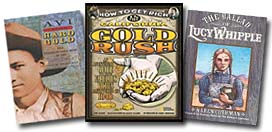 The School of Library, Archival, and Information Studies (SLAIS) iSchool@UBC will be hosting Jim Silverman at UBC. In his talk, Jim Silverman shares stories and pictures from children’s literary fairy tales published in California between 1868 and 1945. They range from a classic fairy tale biography of a Gold Rush eccentric called Emperor Norton, to libidinous tales spun and illustrated by a feminist-actress-mother of 10, to an Art Deco tale with a mortuary advertisement, and tales in which fairies promote a child radio star and pitch commercial products and kids discover the magic that happens by looking through a strip of colour film.